

Ryszard W. Wolny
Publisher: University of Opole Press, 2025, B5 format, 202 pp., hardcover
ISBN: 978-83-8332-129-5
“The book titled On Australian and European Trails: Andrew Taylor’s Poetry of Nature, Man and Ashes. A Comparative Study in Eco-Phenomenology and Eco-Deconstruction examines the work of an outstanding poet, one of the most distinguished living Australian poets, born in 1940. The author argues that this master of the written word seeks to uncover the inner landscape of humanity, weaving together a full spectrum of colors not only from his native Victoria but also from other Australian states and foreign countries, including Italy, Germany, Poland, the USA, and China. His poetry is characterized by formal and emotional diversity, which makes him a recognized heir and continuator of the great legacy of the English language and the literature created in it. In addition to lyric poetry, which forms the core of his work, his oeuvre also includes poetic prose, poems for children, a long poem, a critical book, and opera librettos. The monograph excellently presents the world of Taylor’s work
The strengths of the reviewed book lie in the author’s interpretive skills, his research methodology, and his excellent use of methodological tools.”
/From a review by Dr. Paweł Tański, Prof. at Nicolaus Copernicus University/
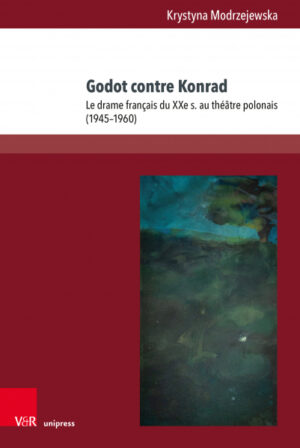
Krystyna Modrzejewska
Le drame français du XXe s. au théâtre polonais (1945–1960)
Publisher: V&R unipress, 2025, B5 format, 160 pp., hardcover
ISBN:978-3-8471-1897-8
The encounter of the Polish theater audiences in the capital and the provinces with the masterpieces of Jean Giraudoux, Jean Anouilh, Jean-Paul Sartre, Albert Camus, Samuel Beckett, and Eugene Ionesco, staged by the best-known Polish directors: Edmund Wierciński, Erwin Axer, Bohdan Korzeniewski, Tadeusz Byrski, and the newcomers: Jerzy Grotowski, Krystyna Skuszanka, Wojciech Krasowski, Adam Hanuszkiewicz, and Zygmunt Hubner—was always the main focus. The outstanding actors: Halina Kossobudzka, Maria Dulęba, Halina Mikołajska, Maria Kościałkowska, Kalina Jędrusik, Jan Świderski, Jan Kreczmar, Jacek Woszczerowicz, Aleksander Zelwerowicz, Gustaw Holoubek, Tadeusz Fijewski, Adam Hanuszkiewicz, Zygmunt Hubner, Franciszek Pieczka, and Tadeusz Fijewski had the opportunity to create unforgettable, iconic roles there. Scholarly critics—Jan Kott, Zygmunt Greń, Jan Andrzej Szczepański, Edward Csato, Tadeusz Kudliński, Stefan Treugutt, Wilhelm Szewczyk, and Jan Paweł Gawlik—revealed both the audience’s enthusiasm and their dilemmas stemming from their education in great Romantic literature, as well as the authorities’ decisions, which were sometimes difficult to accept.
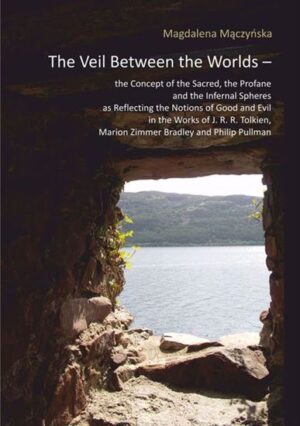
Mączyńska Magdalena
Publisher: Wydawnictwo UO, 2025, B5 format, 226 pp., softcover
ISBN: 978-83-8332-114-1
The book is not only logically structured, in accordance with the author’s intentions and theoretical premises, but reading the successive chapters provides intellectual satisfaction in the fundamental sense that one can see in them the scholar’s relentless effort to interpret literary texts as broadly as possible: the author carefully examines the diverse intentional wholes that are the fantasy works of various origins under analysis. The strengths of the reviewed book lie in the author’s interpretive skills, her research methodology, and her excellent use of methodological tools. I believe that the book is an extremely successful project, an immensely interesting testament to careful reading, and an original proposal for the interpretation of literary texts.
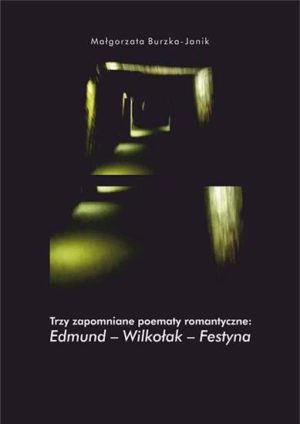
Burzka-Janik Małgorzata
Three Forgotten Romantic Poems: Edmund – The Werewolf – Festyna
Publisher: UO Publishing House, 2025, B5 format, 282 pp., softcover
ISBN: 978-83-8332-113-4
The protagonists of the book Three Forgotten Romantic Poems: Edmund – The Werewolf – Festyna are figures on the margins of Polish Romanticism: Stefan Witwicki, Tomasz August Olizarowski, and Karolina Proniewska, who is virtually unknown. Reading their poems provides an opportunity for existential and philosophical reflection, focused on exploring the essence of the world and humanity, while also allowing one to experience the full range of romantic emotions—from melancholy and dread to the hope that overcomes them. The profound truth about humanity embedded in them ensures that they have not lost their cognitive or aesthetic value to this day, while Romanticism gains—in the case of these very authors (the two Krzemieńcy, Witwicki and Olizarowski, and the Żmudzinka Proniewska) and their texts (the “darkest” *Edmund*, the frenetic Wilkołak, and the mystical Festyna)—gains three distinct and intriguing incarnations of regional variants: Lithuanian, Ukrainian, and Samogitian. The book is intended for readers who seek in the literature of the first half of the 19th century a new model of the era and of humanity, different from that proposed by the “prophetic” Romanticism of Mickiewicz, Werther, or Byron.
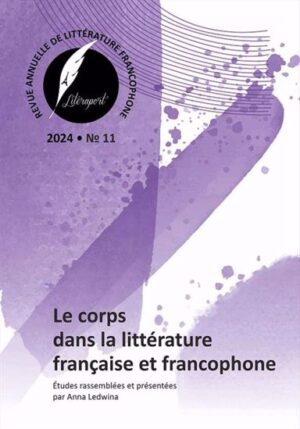
Anna Ledwina (ed.)
Literaport • Revue annuelle de littérature francophone № 11
Publisher: UO Publishing House, 2024, B5 format, 156 pp., softcover
ISBN: 978-83-8332-089-2
Daniel Pietrek
Publisher: V & R Unipress GmbH, 2025, B5 format, 288 pp., hardcover
ISBN: 978-38-4711-823-7
The Munich-based Carl Hanser Verlag was one of the most important publishers in the 1950s and 1960s when it came to promoting Polish literature in West Germany. The fact that—from the 1950s onward (after a period of publishing German classics)—the Hanser Verlag also focused on Polish literature is not easy to explain. However, this decision was all the more significant because Polish literature in translation often built bridges to Poland’s neighbors after the end of World War II and paved the way for a new phase in the German-Polish dialogue aimed at reconciliation. This publishing policy was maintained over the following decades. Daniel Pietrek analyzes and describes this unique cultural transfer in his study.
Bartosz Suwiński
Write It Down, Make It in Time. Notes on Poetry from 1993–2021
Publisher: University of Opole Press, 2024, B5 format, 232 pp., softcover
ISBN: 978-83-8332-077-9
The intention of this book is—as the title suggests—to accompany contemporary poetry and to reveal the polyphony of sounds in today’s verse. The essays included in the book express a refreshing, unordered approach to reading that defies ready-made answers, overarching messages to the reader and are an attempt to present the poem as something that opens us up to what is other, not necessarily close to us or familiar, teaches us empathy, and, moreover, brings us closer to the processual nature of reality, offering a lesson in attention and becoming the beginning of a thought process whose movement gives us the possibility of transformation. After all, reading poetry is nothing other than a constant confrontation with the infinite, with mystery and the unknown, at the cost of shedding simplistic, consumerist habits.
Paweł Marcinkiewicz
Publisher: V & R Unipress GmbH, 2024, B5 format, 232 pp., hardcover
ISBN: 978-38-4711-644-8
This book deals primarily with American avant-garde literature of the twentieth and twenty-first centuries, and the contemporary practice and politics of its translation into Polish, seeking to answer the following questions: What is the meaning and the limits of avant-gardism? What is the rationale behind literary translations and what is their life cycle within receiving literary polysystems? Furthermore: What is the importance of translation in shaping the politics of meaning—our collective textual practices that determine our epistemological perspectives in literature and beyond? And finally: What are the consequences of implementing foreign modes of thinking and political practice in the receiving culture, both in the social sphere and in writing?
Modrzejewska Krystyna
Respect and Contempt. Essays on French Literature (STUDIES AND MONOGRAPHS NO. 632)
University of Opole Press, 2023, B5 format, 198 pp., softcover
ISBN: 978-83-7395-996-5
The book “is aimed at a wide audience with an interest in the humanities, and at lovers of French literature in particular. […] The author guides the reader through a dozen or so masterpieces of French literature […] with the erudite pen […] of an expert, […] who moves with great ease through the realm of French novels and theater from various eras, from the Middle Ages to the present day. She does so in accordance with the current state of knowledge, while not hiding her own reflections or conclusions drawn from her own and others’ readings. Krystyna Modrzejewska skillfully connects Montaigne’s reflections with the works of philosopher Bernard-Henri Lévy, Molière’s comedies with Baudrillard’s art of seduction, Céline’s fictional world with Kristeva’s “power of disgust,” , the relationships in Genet’s theater with sociologist Erving Goffman’s “interaction ritual,” and Beckett’s visions with Zygmunt Bauman’s “retrotopia.” To explain certain historical and literary phenomena of 17th-century France, for example, she draws on the contemporary works of Pierre Bourdieu and Marco Fumaroli. The intellectual horizons of this Opole-based Romanist are truly broad here. Her analyses of literary works are always firmly grounded in historical, political, and social contexts, which enhances the didactic value of the study”
(from a review by Prof. Wiesław Malinowski, Ph.D., Adam Mickiewicz University).
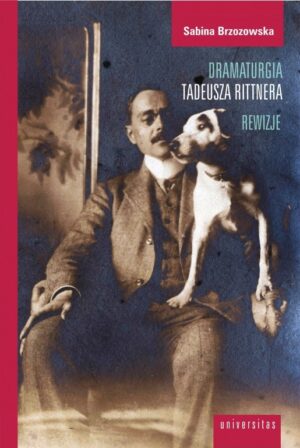
Sabina Brzozowska
The Dramaturgy of Tadeusz Rittner – Revisions
Kraków: Universitas, 2023, B5 format, 324 pp., softcover
ISBN 978-83-242-3995-5
Tadeusz Rittner had long “waited” for such a monograph. Sabina Brzozowska has for some time devoted her research attention to the work of this underappreciated playwright. The monograph *The Dramaturgy of Tadeusz Rittner – Revisions*, the result of her multifaceted scholarly explorations, offers a substantively excellent proposal for new interpretations of Rittner’s works, revising in many areas the former (now outdated) conclusions of Zbigniew Raszewski. Brzozowska’s book demonstrates a very high academic standard, contributes immensely to knowledge of the subject, reveals an excellent combination of historical-literary and historical-cultural expertise as well as knowledge in the field of Polish and foreign theater history, and further serves as a model example of scholarly narrative written in masterful language.
From a review by Prof. Tomasz Sobieraj, Ph.D.
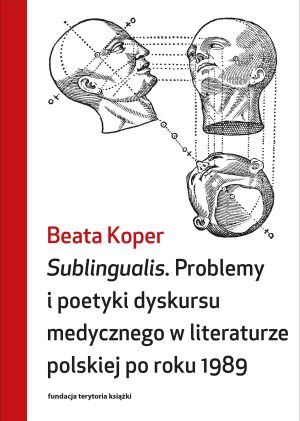
Beata Koper
“Sublingualis. Problems and Poetics of Medical Discourse in Polish Literature after 1989”
Gdańsk: Fundacja Terytoria Książki, 2024, B5 format, 196 pp., hardcover
ISBN 978-83-7908-285-8
In her book, the author examines Polish literature produced after 1989 to explore the language used to express experiences in areas dominated by medicine. By analyzing, among others, texts by Jolanta Brach-Czaina, Anna Nasiłowska, Manuela Gretkowska, Justyna Bargielska, Jacek Baczak, Andrzej Szczeklik, Małgorzata Baranowska, Jakub Małecki, Dominika Dymińska, Joanna Bator, and Izabela Morska, she writes about illness and treatment, old age and death, miscarriage and childbirth.
The influence of medical discourse on language is reflected in the title term—sublingualis—taken from the dictionary of anatomy and pharmacology, which means “sublingual” and is used to describe the method of taking medication. Sublingual tablets are placed on the floor of the mouth and left to dissolve. It is a term that—taken out of its medical context—sparks the imagination. The hidden tablet dissolves and, without our will, penetrates the body. What is active lies outside of us. We remain passive, though we sometimes feel the effects of the medicine, both the desired and the side effects. The sublingual is invisible, yet discoverable. Sublingualis is a word that captures the functioning of medical discourse in literature and in reality. It is a sublingual tablet that turns out to be a pharmakon. It enriches our language (speech) with new vocabulary, while simultaneously appropriating the entire narrative of experience.
The Ars Medica Ac Humanitas series is published by the słowo/obraz terytoria publishing house and the Terytoria Książki Foundation.
Project co-financed from the state budget, allocated by the Minister of Education and Science under the “Excellent Science II” Program.
Kuźnicki Sławomir
Sparks Fly at the Intersections: Literary Contexts of Rock (Studies and Monographs No. 630)
University of Opole Press, Format: B5, Year of publication: 2023, p. 274, Binding: softcover
ISBN: 978-83-8332-005-2
David Bowie and dystopian literature; Nick Cave and the four stages of trauma; Lou Reed and the politics of sexual transgression (inspired by the plays of Frank Wedekind); P.J. Harvey and socio-political photographic poetry; Maciej Maleńczuk and his reinterpretations of Emily Dickinson’s poetry; Swans and the search for metaphysics in the spirit of William Blake; Prince and the utopian projections of Jehovah’s Witnesses; Queen and the visual arts of Richard Dadd and Grandville; The Beatles and Charles Manson’s sick pseudo-philosophy (and the influence of both on Nine Inch Nails); Nina Simone and the politics of racial and gender equality; Peaches and her hypersexual subversion of male-dominated sexist culture—these are the themes explored in the book Sparks Fly at the Intersections: Literary Contexts of Rock. These are topics directly related to rock music, but approached from a literary perspective, while remaining open to the broader cultural context in which both music and literature operate.
At the same time, this book is indeed situated at the intersections where sparks fly. Thus, there are intersections concerning the aforementioned relationship between rock and literature (and culture), taking into account points of divergence such as issues of identity, spirituality, or sexuality. At the same time, however, there are also points of contact here that encompass the author’s approach to the analyzed issue—these spark no less than the first ones. They can be situated somewhere between openness to the external context—inspired by Edward W. Said—and passion. Yes, this book was not written solely out of a sense of duty understood as the author’s mission toward his readers. Sparks at the Intersections: Literary Contexts of Rock is also the fruit of the emotionally engaged passion that characterizes the author’s attitude toward the subject. For, as Nicholas Cook notes, “Music is not detached from reality; it is, in fact, at its very center, for people it is not so much one of many things as a way of knowing the world, a way of being oneself.”
Beata Koper
Migraine Namesakes. Essays on Literature
University of Opole Press, Format: B5, Year of publication: 2024, Binding: softcover
ISBN: 978-83-8332-033-5
In literature, there appear heroines and heroes who do not play the social roles assigned to them, who rebel against established rules, who refuse to submit to the norms set by society and accepted as natural law. They are melancholics, dreamers, madwomen and madmen, suicides. With an absent gaze, they look beyond the horizon; their thoughts are elsewhere; they seek a language to express the inexpressible, or they completely renounce an existence they can no longer bear. Among them we also find women with migraines. Culture has cemented their image as women lying on chaise longues, hidden in boudoirs, resting in alcoves. Their hands touch their foreheads in a characteristic gesture. They are also often afflicted by globus histericus—the most famous ailment of ladies. […]
In the first part of the book, I present a general overview of the history of migraine from two perspectives—medical and literary. In the three subsequent parts, I take the liberty of offering biographical and literary close-ups. The protagonists of these stories are Emilia Korczyńska, a character from Eliza Orzeszkowa’s novel *Nad Niemnem*, Virginia Woolf, the English novelist, and Słodka Darusia from Maria Matios’s novel. Namesakes of the migraine. And though one of them lived in reality, while the other two exist only in our imagination, they are all invariably associated with headaches. […]
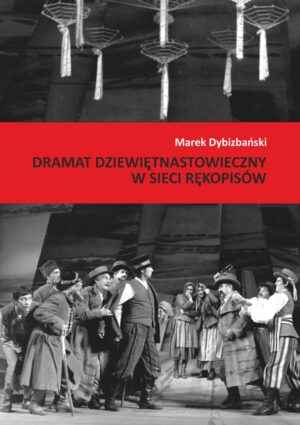
Dybizbański Marek
Nineteenth-Century Drama in the Network of Manuscripts
University of Opole Press, Format: B5, Year of publication: 2023, p. 296, Binding: softcover
ISBN: 978-83-8332-014-4
Marek Dybizbański’s publication is an extraordinary book. Written by an outstanding expert on 19th-century theater and drama, as well as a researcher in the fields of textual genetics and comparative mythology, it explores unknown, often overlooked areas of professional reading of dramatic manuscripts. The subject of the work are unfinished plays or those existing in various versions, with a structure that is either unformed or unclear, posing a challenge for editors and readers, as well as theater professionals. The protagonists of the book are: Juliusz Słowacki, Mieczysław Romanowski, Felicjan Faleński, Cyprian Norwid, Adam Asnyk, Henryk Sienkiewicz, Teofil Lenartowicz, Władysław Reymont, and Stefan Żeromski. Together with the author, we examine dramatic works in close proximity to the manuscript, from a close perspective that reveals the creative process—or rather, the process of crystallization and transformation of dramatic forms. The author’s argument is characterized by precision and discipline of analysis, consistency of execution, interpretive caution, and at the same time—paradoxically—the courage to tackle the most difficult topics.
Prof. Maria Kalinowska, Ph.D. (University of Warsaw)
Marek Dybizbański’s book consists of a sequence of chapters on individual works, which, through a deeply considered and precisely constructed interpretation, reveal new meanings important for understanding a given work, the writer’s oeuvre, or broader processes. The author repeatedly corrects existing bibliographical and literary-historical findings, which in itself lends his work great value. Yet this is only the beginning, because the other side of eliminating errors is uncovering the true state of affairs, establishing the facts. In subsequent studies, the researcher reports on many such discoveries and the stages of painstaking research that led to them. The reader agrees to endure these hardships not only to share in these discoveries. The author captivates the reader with the strength, reliability, and elegance of his argument. At their climax, Dybizbański’s analyses reach a level of incredible virtuosity. His reflections strike the reader with the accuracy of his observations and phrasing.
Prof. Radosław Okulicz-Kozaryn, Ph.D. (Adam Mickiewicz University)
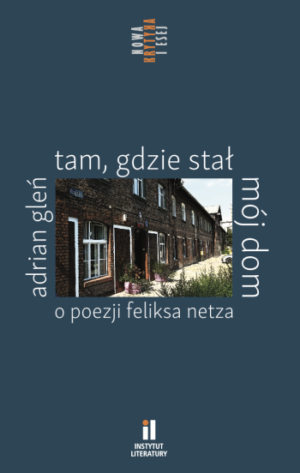
Adrian Gleń
“Where My House Stood”: On the Poetry of Feliks Netz
Kraków, Institute of Literature, 384 pp., 2023, B5 format, softcover
ISBN 978-83-67602-68-6
The monograph “Where My House Stood”: On the Poetry of Feliks Netz is the second (following Barbara Zwolińska’s volume “Being Oneself and Someone Else”: on the work of Feliks Netz a historical-literary lecture, organized primarily according to chronological criteria) an attempt at a comprehensive interpretation of the entirety of Feliks Netz’s poetic oeuvre. The primary category, which serves both as an interpretive key and as an element allowing for the organization of the poetic material of the poems by the author of Wir, is the home, understood as a physical space (connection to the city), a mental space (apartment—a territory of privacy) and symbolic (home—homeland).
The entire volume is constructed from several mutually complementary parts. In the first of these, the author included a sketch of the author’s biography from the wolf pits, focusing on the stages of the creator’s life, described from the perspective of “Netz’s addresses”—his successive residences (primarily from the time the writer settled in Katowice)—each associated with specific experiences and modes of poetic imagery. The second chapter (Netza’s Homes) serves as a sketch for a future synthesis of the poetic oeuvre of the author of The Owl’s Cry; it offers an interpretation of the theme of dwelling, understood as a fundamental indicator of the process of constructing the poet’s own distinctiveness and identity. The third chapter, in turn, consists of studies and essays on selected volumes (The Bond of Consent and Three Days of Immortality) and works by Netz (the so-called hospital poems and the poem I Don’t Care).
The volume is supplemented by the author’s selection of Feliks Netz’s poems, enriched with an extensive editorial note that traces the poet’s work on individual texts, as well as an appendix containing a memoir of the poet and two previously unknown works discovered in his computer archive.
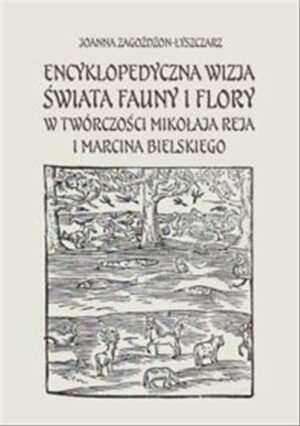
Zagożdżon-Łyszczarz Joanna
An Encyclopedic Vision of the World of Fauna and Flora in the Works of Mikołaj Rej and Marcin Bielski (STUDIES AND MONOGRAPHS NO. 605)
Opole: UO Press, 2022, B5 format, 776 pp., softcover
ISBN: 978-83-7395-924-8
This work is part of the research on the Old Polish worldview and essentially addresses two issues. One of them is the identification of encyclopedic content concerning natural history in the works of Mikołaj Rej and Marcin Bielski. The perspective outlined above, from which the aforementioned material was analyzed, required the exploration of extensive ancient, medieval, and Renaissance contexts, as well as works known and read in Europe at the time. The sheer volume of this published output would seem difficult to grasp were it not for the conviction underlying this scholarly endeavor that the ancient encyclopedia is a type of work in which deposited knowledge resides within a closed collection of pre-existing texts. This means that the ready-made formulas of “scholarly” descriptions of plants and animals were not only reproduced and adapted in various floraria, bestiaries, or specula, but above all incorporated into literary works, where this encyclopedic knowledge was popularized.
It also seems important to ask—and this constitutes the second problem in reconstructing the literary image of nature—for what purpose elements of the natural world were invoked by the authors. These examples form a sort of repertoire of inventive topography, which is entirely consistent with Renaissance practice, although the sources of these examples date from an earlier era. The popularity and vitality of such topical catalogs in Old Polish literature is astonishing, even though—with few exceptions—they are not influenced by Renaissance or purely classical inspirations. The aim of this monograph was therefore both to compare nature motifs in the works of Rej and Bielski with the encyclopedic knowledge of the time, and to draw attention to the manner in which floristic and faunistic topics were developed in their works. An important part of this work was also an attempt to gain insight into the poetics, composition, and construction of literary expression, where the cited exempla served specific functions, revealing the mechanisms of creative activity.
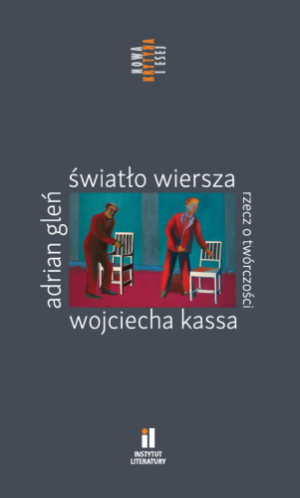
The Light of the Poem: On the Work of Wojciech Kass
Kraków: Institute of Literature, Format: B5, Year of publication: 2022, Binding: softcover
ISBN: 978-83-67170-78-9
The Light of the Poem is the first attempt at a monographic study of the work of Wojciech Kass, a poet and essayist who lives and works in an extraordinary place—the Pranie Forest Lodge, home to the Konstanty Ildefons Gałczyński Museum; The protagonist of this book is the very person who cares for the legacy of the author of The Enchanted Carriage with great care and devotion.
However, this is not a classic overview of the entire body of work by Kass, one of the most interesting contemporary Polish metaphysical poets. Indeed, in In the Light of the Poem, the reader will find both an extensive outline for a future biography of the author of Metafu, a comprehensive chapter devoted to the primary category (light) that organizes the poet’s work, as well as a biobibliography as comprehensive as possible, interviews—to which Kass attaches great importance—numerous synthetic articles, and texts offering analyses and interpretations of individual poems and volumes by the author of *Gwiazdy Głóg*. All of this, however, is supplemented by a chapter comprising various forms, within which the author of this book attempts to approach the mystery of both Kass’s poetic idiom (expressed in the poems The Seal of Ignorance, A., There Were Many Such), as well as the nature of the poems and diary-essayistic entries by the author of The Writing Hand.
The methodological framework of The Light of the Poem is a reading model inspired by the ideas of thematic critics (from the so-called Geneva School) ; in many places, the author of the monograph experiments with the form of interpretation, basing them on phrases and metaphors derived from Kass’s poems, attempting—much like Jean-Pierre Richard in Poetry and Depth—to outline the contours of the poetic interior of this work and identify its key passages and motifs.
The monograph also presents an original (and agreed upon with the author himself) selection of poems, ranging from his debut collection *Toward the Light* to his latest original volume titled *Metaf*, as well as individual excerpts from *The Writing Hand* (2021)—a diary-style cycle derived from Notes, whose successive installments Wojciech Kass published primarily in the pages of “Topos,” a journal with which he has been continuously associated for nearly a quarter-century.
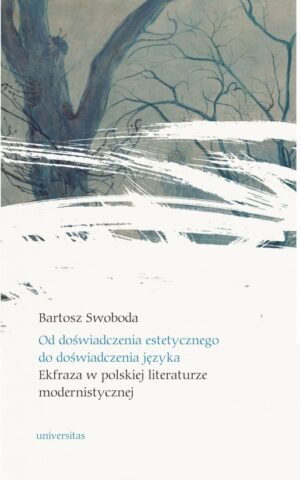
Bartosz Swoboda
From Aesthetic Experience to the Experience of Language. Ekphrasis in Polish Modernist Literature
Kraków: Universitas Publishing House, Format: B5, Year of publication: 2022, p. 256, Binding: softcover
ISBN 978-83-242-3838-5
The monograph From Aesthetic Experience to the Experience of Language: Ekphrasis in Polish Modernist Literature offers multifaceted reflections on the concept of ekphrasis, presenting the subject matter in an original way through the lens of the category of experience, with particular emphasis on aesthetic experience and the experience of language. The point of reference for this interdisciplinary study, in which the literary description of a work of art is treated as a specific form of articulating aesthetic experience, is a broad panorama of Polish modernist literature—from Wyspiański and Staff to Wat and Herbert. By framing reflections on ekphrasis within the category of experience, the book encourages adopting a perspective on literature that allows traces of existence, experience, and engagement to be highlighted in the text.
Bartosz Swoboda faced a difficult task; as a researcher clearly fascinated by the issues of ekphrasis, he had to find an effective solution to define his research problem. He did so brilliantly, linking ekphrasis with aesthetic experience and linguistic experience. This is what gave the dissertation its groundbreaking character and also necessitated the development of thoroughly interdisciplinary descriptive tools: philosophy and aesthetics are combined here with literary history and theory, as well as with art history and art criticism. Interdisciplinarity here is not merely a gimmick pulled from ministerial or institutional guidelines, but a genuine necessity (…). Interdisciplinarity genuinely serves here to break down the barriers and divisions between individual disciplines—Bartosz Swoboda has excelled in developing the metalanguage of his dissertation, in which issues of art history, philosophy, and literature are harmoniously integrated.
Prof. Adam Dziadek, Ph.D., University of Silesia in Katowice
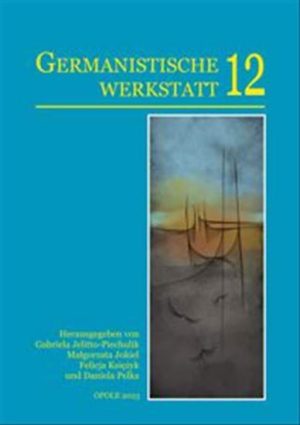
Jelitto-Piechulik Gabriela, Jokiel Małgorzata, Księżyk Felicja, Pelka Daniela (eds.)
“Germanistische Werkstatt” Vol. 12: Future Potential of German Studies: Topics, Trends, Tendencies
University of Opole Press, Format: B5, Year of publication: 2023, p. 168, Binding: softcover
ISBN: 978-83-8332-015-1
The authors of the individual articles raise questions about the role of the humanities in a constantly changing world of constructive interactions, but also of difficult cultural clashes. The central theme of the volume is the related perspectives opening up for German studies, as well as the topics and trends currently engaging scholars—in other words, the future potential of German studies. The articles on linguistics address, among other things, aspects such as archival collections as a source for philological research, changes in the field of professional communication, the study of the linguistic landscape, the role of German as a minority language in Hungary, innovations in the formation of German adjectives, and features of the medieval language of Wrocław chancelleries. The literary-cultural section is devoted, among other things, to the works of Wolfgang Koeppen and Alfred Döblin, as well as to phenomena such as tabooization, Silesian Texans, and the German Catholic Church in Lower Silesia.
The book is intended for scholars, students, and a broad audience interested in linguistic, literary, and cultural issues within the broadly defined field of German studies.
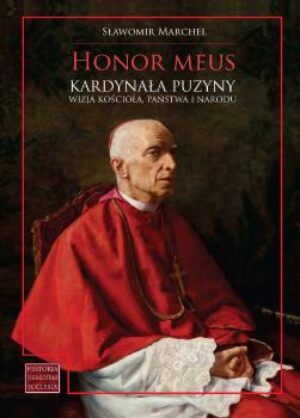
Honor meus. Cardinal Puzyna’s Vision of the Church, State, and Nation
Kraków: Księgarnia akademicka, 2022, B5 format, 281 pp., softcover
ISBN 978-83-8138-643-2.
Cardinal Jan Duklan Maurycy Paweł Puzyna is one of those figures recorded in the annals of Polish history whose activities continue to raise doubts and controversies to this day. The unpopular decisions he made were the main reason why, over time, he became a symbol of a fading world of conservative ideas, marginalized at the turn of the 19th and 20th centuries by the rise of modern political and ideological movements. Within the Church, Cardinal Puzyna is still associated today primarily with the last official attempt at direct interference by secular authorities in the papal election process, which took place during the memorable conclave of 1903. This study represents the first attempt to examine the figure of Jan Puzyna in as broad a context as possible. In discussing his views, the author has drawn attention to the social and cultural factors that influenced the cardinal’s ideological formation. The analysis also examines aspects of the clergyman’s activities that relate directly and indirectly to his beliefs. The study also reflects on issues related to the reception of Puzyna’s personality, his decisions, and the views he espoused, both within and outside the clergy. A consequence of this approach is the question of why the narrative surrounding Cardinal Puzyna has been dominated by an emphasis on negative assessments of his activities. According to the author, the phenomenon of this image’s persistence in collective memory allows for a better understanding of the relationships between various models of attitudes still visible in Polish public life today.
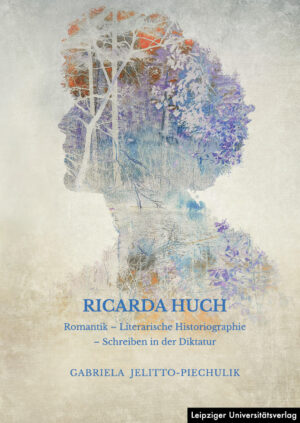
Ricarda Huch. Romantik – Literarische Historiographie – Schreiben in der Diktatur
Leipziger Universitätsverlag, 2022, B5 format, 695 pp., softcover
ISBN 978-3-96023-270-4
With her reflections on the history of ideas and aesthetics, Ricarda Huch has demonstrated that she cannot be categorized within a traditional worldview. And it was precisely with this argument that she countered the claim that she was a “conservative” in her thinking and writing; rather, her aim was to grasp human beings in their relationship to themselves, their environment, and their history, and to situate them within the respective political, social, and aesthetic contexts of their time. Her works therefore cannot be described in terms of an artistic or stylistic movement typical of the era, but rather incorporate these and form an intellectually autonomous response to them. Thus, according to Golo Mann, she deserves the title “Queen by nature and achievement”—a poet and thinker who presented her subjective view of the world, coupled with considerable knowledge, in a multifaceted body of work.
The aim of this thesis is, first, to provide insights into Huch’s biography. Subsequently, the positioning of her work within literary-historical research will be discussed. The chronological scope ranges from the thematization of the individual in her works on German Romanticism, through her historical works, to her decision to write about the resistance against National Socialism.
These three thematic focal points—Romanticism, literary historiography, and writing under dictatorship—are brought together by the thesis of the idea of the human self. Huch has continuously developed this thesis and anchored it in her writings and works. The individual, who is constantly present in Huch’s works and stands at the forefront of the subject matter, represents the synthesis demanded by the author between phenomena that appear to be in contradiction with one another.
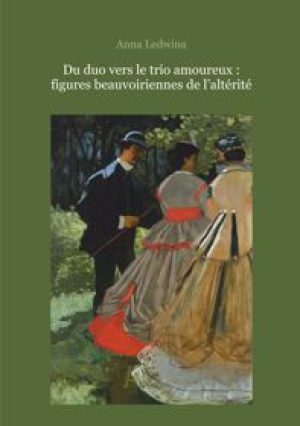
Anna Ledwina
Du duo vers le trio amoureux: figures beauvoiriennes de l’altérité, Studia i Monografie nr 578
Opole: University of Opole Press, 2019, B5 format, 282 pp., softcover
ISBN 978-83-7395-818-0
This book is an attempt at an interdisciplinary examination of the problem of love and the relationship with the Other, using the example of two novels by Simone de Beauvoir—L’Invitée and La Femme rompue.
Love, inextricably linked to the concept of otherness, is portrayed by the author in various configurations: from the moment of meeting and first infatuation, through the formation of a relationship between two people, then a ménage à trois, up to the breakdown of this unconventional relationship model. This complex and ambivalent emotion is interpreted as communication between two or three people possible only on the plane of total freedom and reciprocity. Inherent in the human condition, it encompasses a whole range of emotions, often extreme, highlighting the inseparable influence of other people on our lives.
The multidimensionality of the concept of otherness allows for the presentation of the writer’s original vision, which promotes the independence, development, and autonomy of the individual, while simultaneously reflecting her striving to achieve existential fulfillment with another human being.
The book is intended for literary scholars, researchers of French and Francophone literature, as well as students and graduates of Romance philology.